When I came across the title The Zorg several months ago, the ship’s name
did not ring a bell with me. It was the rest
of the book’s title that captured my
attention: A Tale
of Greed and Murder That Inspired the
Abolition of Slavery.
Before reading Siddharth Kara’s
well-researched work, I thought I knew all I
needed to know about slavery - at least the
U.S. mode of enslavement. My people were
kidnapped from their homeland, forced across
the Atlantic Ocean in our own Maafa, treated
as chattel, and required to work for free
under the most heinous conditions. Except
for a few sporadic periods of progress, the
trajectory put us on a horrific course,
infected and shaped by enslavement. What
else did I need to know!
Kara is a Pulitzer Prize finalist
and author of Cobalt Red, a New York Times bestseller. I was unfamiliar with
his work, but the repeated theme of his
respected research was enough of a
credential to draw me in.
This was not an easy read for me.
One reason for the challenge is that I am a
descendant of enslaved people; my DNA
carries the intergenerational trauma of
slavery and its aftermath. The other reason
is my approach to reading as a visual
processor. I first read the words on the
page before projecting them as images.
Kara’s vivid and brutal storytelling hurled
me into the dark, putrid hull of the Zorg as
an unwilling passenger. I needed to break
the reading into two sessions and engage
only when I was in a sound psychological
state with minimal distractions. Deep
breathing between sections also helped as a
protective method for my psyche.
The Zorg details the 1781 massacre aboard a
slave ship when an inept and greedy crew
threw 132 captive Africans overboard to
collect an insurance payout. The claim
ultimately led to anti-slavery legislation
in England, such as The Dolben Act of 1788
and the total abolition of slavery in 1833.
England was an undeniably powerful
stakeholder in the transatlantic slave trade
by the late eighteenth century, representing
40% of the entire European market. The city
of Liverpool became an important British hub
for slave trafficking, moving more than 80%
of the African slaves for the British.
Kara helps us to fully understand
the circumstances of The Zorg by putting us
in the European industry of slavery. He
provides the reader with captivating aerial
perspectives and close-up encounters which
frame the complex relationships that both
fueled and obstructed the infamous slave
trade.
After reading The Zorg, I’m embarrassed about my ignorance
of the slave trade. I also acknowledge that
some aspects of the trade I couldn’t have
possibly known without the research of
historians like Kara. We’ll probably never
know all the gory details about one of the
most despicable periods in U.S. history.
However, based on lived experiences and
historical accounts, we can objectively
debunk the racist statements of white
politicians who cast slavery in a favorable
light, such as Florida Governor Ron DeSantis
and Alabama Senator Tommy Tuberville.
Here are seven facts I did not
know, at least not consciously, that I
learned from The Zorg:
-The transatlantic slave trade
spanned nearly four centuries.
-Investors in the trade were not
just royalty but others, from the business
elite to the merchant classes, who saw a
lucrative return on their dollars.
-Pirates roamed the ocean looking
for vulnerable ships to commandeer the human
cargo for sale on the open markets.
-The ships were fully staffed
beyond a captain and motley crew of sailors;
there were also navigators and medical
personnel whose presence helped to guarantee
a safe passage of healthy slaves at the end
of the tortuous journey.
- The American Revolution was a
major disruption in the slave trade,
particularly for maritime logistics and
knowledge of which Caribbean islands were
under enemy control.
-The embryonic stages of globalism
were exposed, and the international
fractures highlighted. It is how the Zorg, a
Dutch ship, got targeted and captured by a
British privateer; the Netherlands was on
the wrong side of England.
-The business of slavery was highly
sophisticated and included a labyrinth of
laws, trade agreements between countries, a
network of ports, insurance markets, and
financial systems. Free Africans on the Gold
Coast, like the Fante, negotiated a vital
and profitable role between African tribes
and Europeans during the slave trade.
There have been a few scholarly
challenges to Kara’s nonfiction work. The
central argument of The Zorg is undeniable:
the significance of this particular slave
ship in the abolition of slavery in Britain.
The book deepened my understanding of the
tentacles of an institution built on the
backs of Africans and reinforced the legal
justification for reparations. Its tentacles
are so strong and far-reaching that they
have shaped the course of world history and
human relationships for years to come.
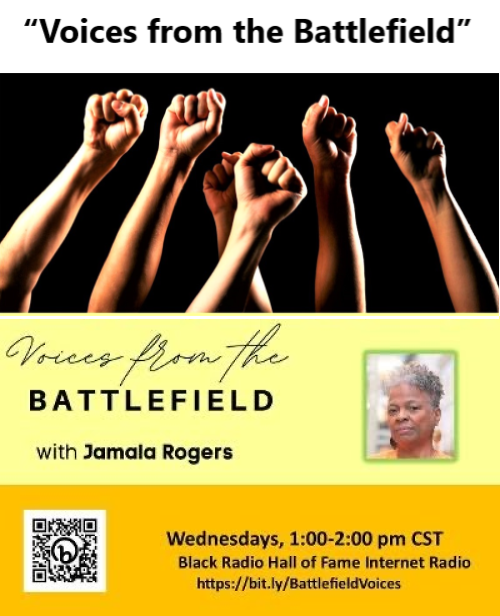
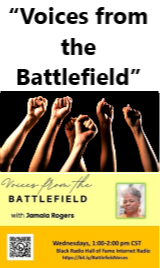
Note: Author and historian Siddarth
Kara will be a guest on Voices from the
Battlefield hosted by Jamala Rogers on
Wednesday, September 17, 2026 at 1:00 pm
CST.