To
say that America was founded on the genocide
of Native Americans and
the enslavement of African people is a true
statement, to be sure.
However, this does not tell the entire
story. Black people, including
the descendants of those who were enslaved
by Native Americans, are a
part of the story of indigenous people.
These Native Americans, who
are Black, have fought against racism from
their tribes and some have
struggled to be recognized.
There
is a lost, painful history that must be
reclaimed. For example, many
have heard about the Trail of Tears, the
forced removal of 60,000
Native people from their land in the
Southeastern U.S. and relocation
to Indian Country west of the Mississippi
River between 1830 and
1850. Many died during the relocation
through hunger, disease and
exposure, including 4,000
Cherokees.
However, what many people do not realize is
that among those who
suffered on the Trail of Tears were Black
people and Cherokees of
African descent, including people who were
enslaved by the Cherokees.
It is a painful and traumatic history that
some folks have chosen to
forget over the years.
Around
24,000 Muscogee (Creek) Nation people were
removed during the Trail
of Tears. By 1860, the Creeks owned 1,600
Black slaves. By the time
of the Civil War, all of the indigenous
nations enslaved somewhere
between 8,000
and
10,000 people.
It is estimated there are 160,000
Black
tribal descendants,
many of them living in Oklahoma.
The
descendants of Black folks enslaved by
tribes are still fighting for
their rights and citizenship as members. For
example, in 1979, the
Creek
Nation
adopted a new constitution and changed its
criteria for membership in
the tribe to blood lineage, meaning those
with so-called freedmen
ancestry were no longer Creek citizens and
no longer eligible for
federal payments. This, although the
post-Civil War treaties granted
full
tribal
citizenship
to the formerly enslaved. In addition, these
circumstances signify a
loss of cultural identity for Black Native
Americans, and only serves
to erase a history of tribal enslavement.
In
2018, six Black Creek descendants sued
the
tribe
and the Department of the Interior to be
reinstated. The Choctaw and
Creek Nations in Oklahoma agreed to consider
reversing their
decisions regarding the Freedmen. Meanwhile,
U.S. Secretary of the
Interior Deb
Haaland,
who is a member of the Pueblo of Laguna and
a 35th generation New
Mexican, approved a new Cherokee Nation
Constitution that protects
the citizenship and political rights of
Cherokee Freedmen. Changes to
tribal constitutions require federal
approval.
“The
Cherokee Nation’s actions have brought this
longstanding issue to a
close and have importantly fulfilled their
obligations to the
Cherokee Freedmen,” said
Haaland.
“Today’s actions demonstrate that Tribal
self-governance is the
best path forward to resolving internal
Tribal conflicts. We
encourage other Tribes to take similar steps
to meet their moral and
legal obligations to the Freedmen.”
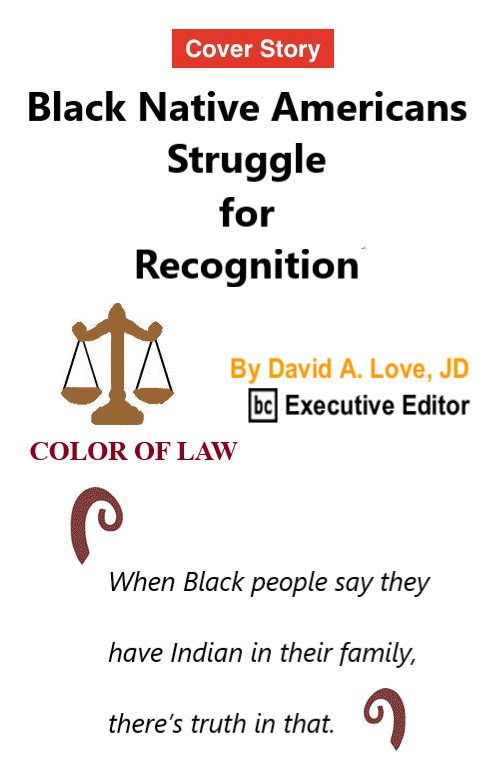
When
Black people say they have Indian in their
family, there’s truth in
that. Part of the struggle against injustice
means confronting a
legacy of racism against Black people in
Indian Country.