Juneteenth
commemorates the emancipation of Black
people and the end of slavery
in the U.S. on June 19, 1865. Also known
also as Freedom Day,
Emancipation Day, Liberation Day and Jubilee
Day. Juneteenth is a
combination of “June” and “Nineteenth.”
Juneteenth
is a Black independence Day that resonates
with African Americans,
who after all were not free on July 4, 1776
and were property. The
day centers Black people as agents in their
own freedom,
abolitionists like Harriet Tubman and
Frederick Douglass, those who
waged rebellions such as Gabriel Prosser and
Nat Turner, and nearly
200,000 black union soldiers, 40,000 of whom
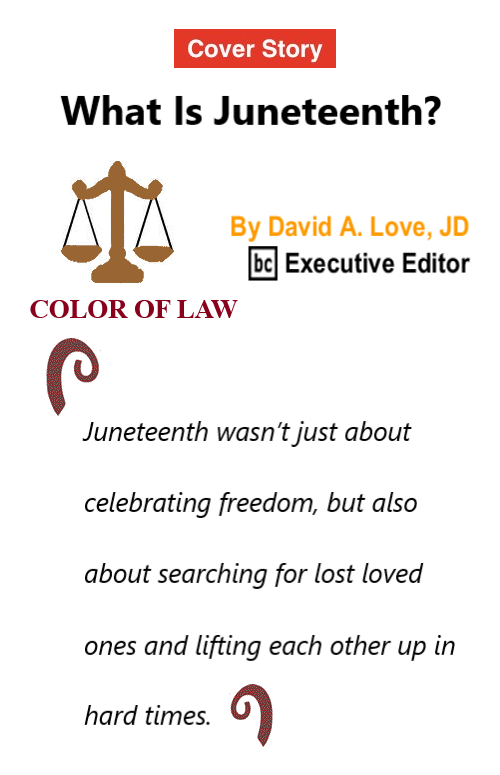
died. Juneteenth wasn’t
just about celebrating freedom, but also
about searching for lost
loved ones and lifting each other up in hard
times. Also, freedom was
short-lived and filled with setbacks,
obstacles and violence.
There
are a variety of ways that the descendants
of slaves celebrate
Juneteenth, including parades, street fairs,
cultural events, church
services, festivals, historic reenactments,
cookouts and protests.
I’d
like to mention six noteworthy factoids
about the holiday, and
finally the greater significance of
Juneteenth at this moment in
time.
-
Black
People Were Not Free Until Two Months
(or Years) After the Fact
Abraham
Lincoln’s Emancipation Proclamation was
effective on January 1,
1863, but didn’t “free” enslaved Black
people who were under
control of the Confederate states. The civil
war was over in April
1865, when General Robert E. Lee surrendered
to the Union Army.
However, Black people in Texas weren’t
informed of their freedom
until June 19 when Union Major-General
Gordon Granger arrived in
Galveston, Texas and read an order informing
them they were free.
Ultimately, however, slavery ended legally
with the 13th amendment,
which Congress had passed in January, and
was ratified in December
1863. There were 4 million enslaved people
in America, and 250,000 in
Texas, over 30 percent of the state
population.
-
Juneteenth
Is a Real Holiday, and Isn’t Only About
Texas
The
holiday started in Texas. As Black Texans
migrated, the day spread to
Alabama, Arkansas, California, Florida,
Louisiana and Oklahoma. Texas
was the first state to declare Juneteenth a
state holiday in 1979.
Today, all 50 states and the District of
Columbia observe Juneteenth
or recognize it as a state holiday. Two of
the largest Juneteenth
celebrations are held in Milwaukee and
Minneapolis, and cities such
as Philadelphia, one of the important
locations of the Underground
Railroad, also hold festivities to mark the
end of slavery.
-
Black
People In Mexico Celebrate Juneteenth
Thousands
of self-liberated Black people fled to
Northern Mexico, and Slavery
had been abolished by Vicente Guerrero, the
second president of
Mexico in 1829, who was Black, leading to
the secession of Texas from
Mexico.
-
Juneteenth
Lost Popularity Before Witnessing A
Resurgence
During
Jim Crow segregation and the Great
Depression, Juneteenth
celebrations waned, but there was a
reawakening during the civil
rights and Black Power movements. Juneteenth
became national and
linked to the civil rights struggle in part
due to a Juneteenth
celebration that took place on the
Washington Mall, at the Poor
People’s March, two months after the MLK
assassination.
-
There
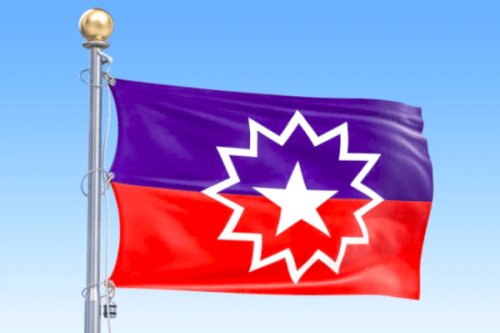
is a Juneteenth Flag
Art
designer L.J. Graf designed a Juneteenth
flag with a red, white and
blue color scheme to represent that the
formerly enslaved and their
descendants are Americans. A white star
represents Texas, and a
bursting star on the horizon represents
freedom.
-
There
was an Effort To Make Juneteenth A
Federal Holiday
The
National Juneteenth Observance Foundation
and 92-year-old Opal
Lee
of Fort Worth, Texas, staged a symbolic walk
from Fort Worth to
Washington to bring attention to the
significance of the holiday. As
a senator, Barack Obama cosponsored
legislation to make Juneteenth a
federal holiday, which did not pass. Amid
the protests following the
murder of George Floyd, Juneteenth became a
federal holiday in June
2021.
Finally,
why Juneteenth is important
Today,
the police killing of George Floyd has
forced the nation to focus not
only on racism in policing and the criminal
justice system, but
everywhere in America. Black people were
emancipated nearly 160 years
ago, and they’ve lived in this country for
over 400 years, but
still live in a hostile environment. The
remnants of slavery remain
in our laws, policies, practices, procedures
and customs. Racism is
systemic and institutional, not merely a few
bad apples or a small
group of people doing harmful things. Not
just a few neo-Nazis
committing hate crimes, but power and white
privilege, and the
microaggressions black people face in
schools and the workplace and
daily life. The U.S. hasn’t come to terms
with its legacy of racism
and white supremacy, including a history of
slavery and how it
deprives Black people of their humanity,
dignity and equality.